

Professor Andrew Radford
Professor of Behavioural Ecology
Tel: +44 117 394 1197
Email: andy.radford at bristol.ac.uk
WELCOME
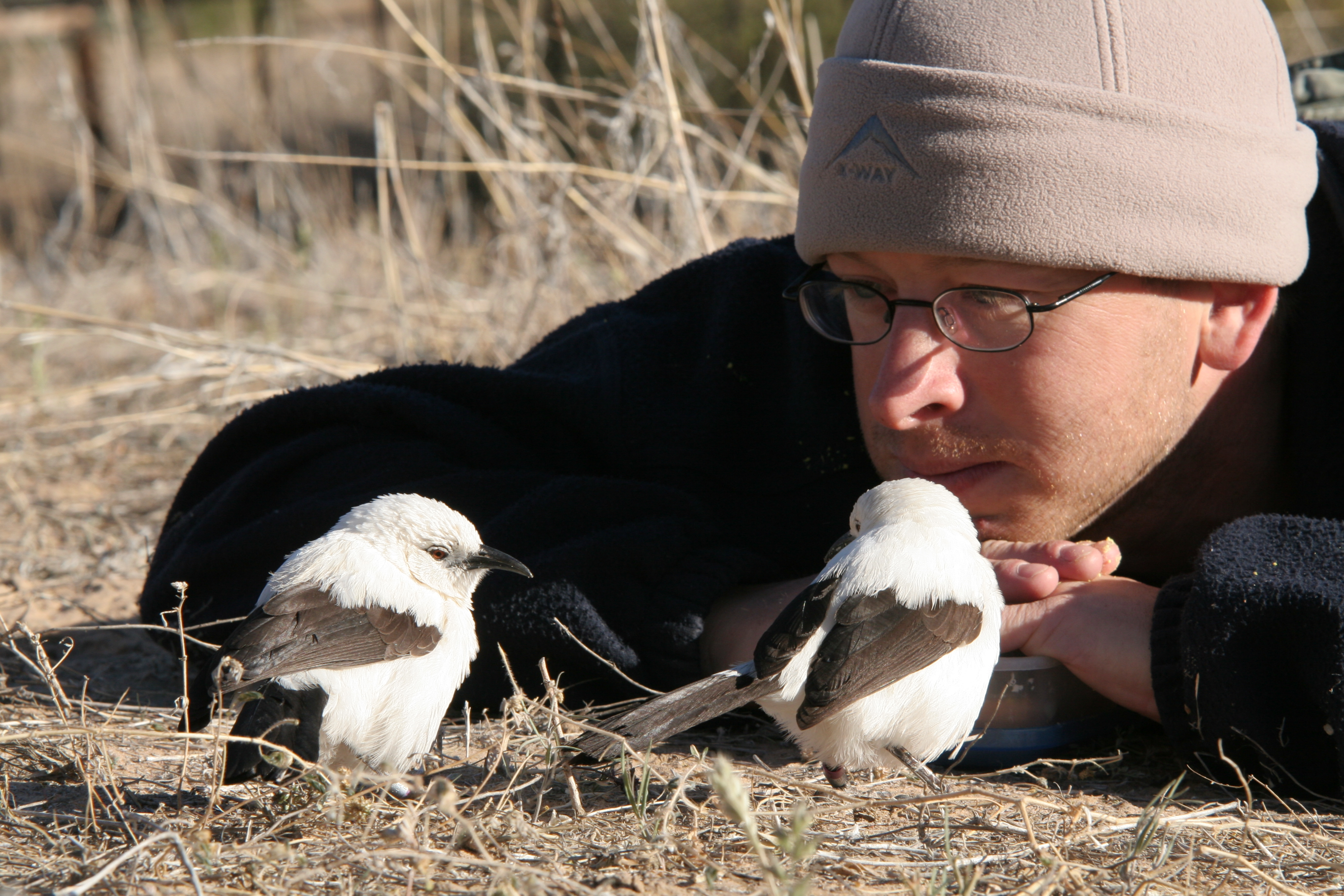
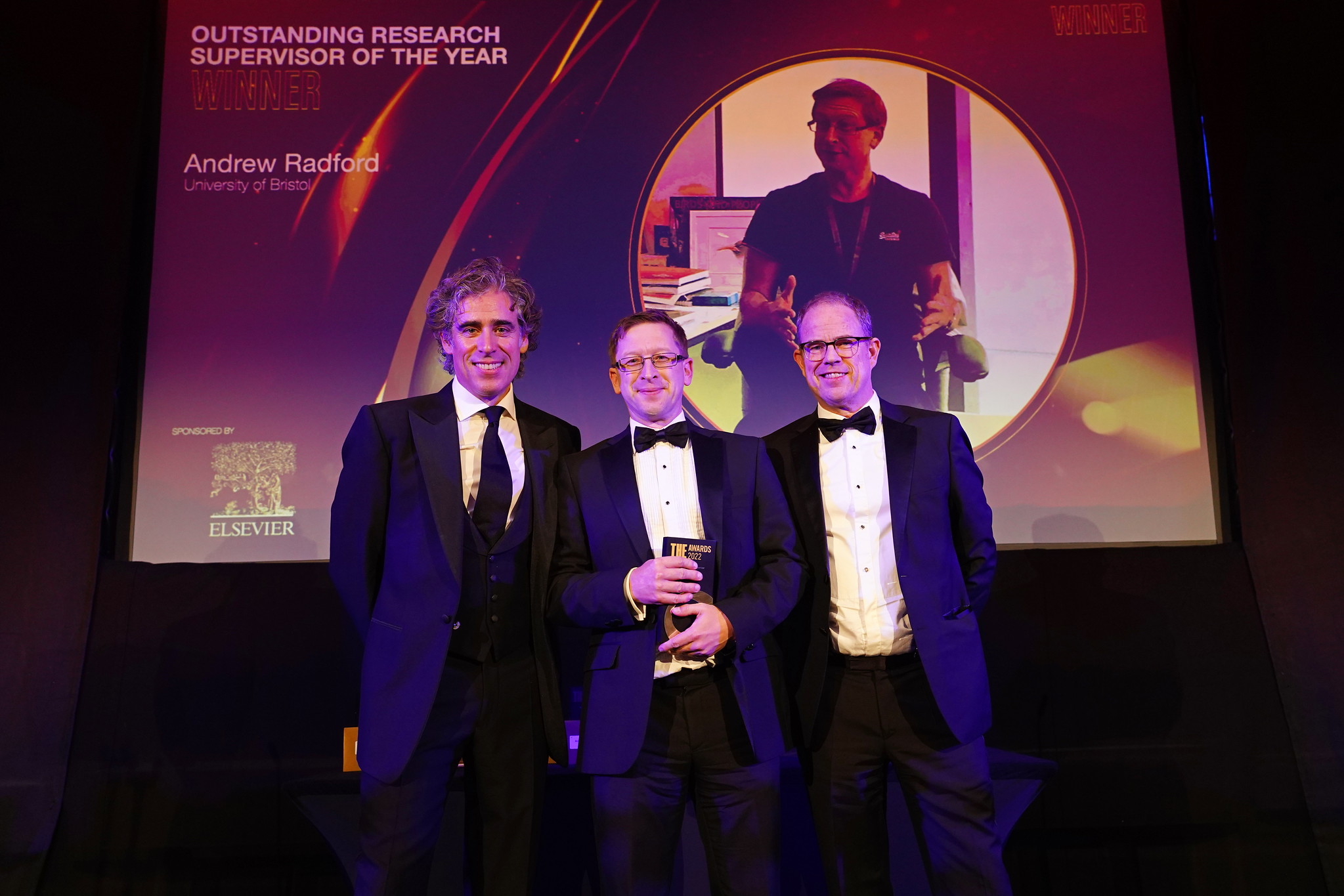
Hello! I am a behavioural biologist based at the School of Biological Sciences, University of Bristol. I am also passionate about both teaching and mentoring, winning a range of awards including: Best of Bristol Lecturer (2020), the University of Bristol Outstanding Research Supervisor Award and Vice Chancellor Award for Education (2022), the Times Higher Education award for Outstanding Research Supervisor of the Year (2022), the Nature mid-career award for Mentoring in Science (2025) and the global Keystone award for Outstanding Teaching & Mentoring (2026).
I have been the Principal Investigator of the Dwarf Mongoose Research Project since its inception in 2011, as well Executive Editor of Animal Behaviour and a Trustee of the Association for the Study of Animal Behaviour since 2021.
I hope you enjoy browsing the website; if you would like to know more or would like the opportunity to work with us, do not hesitate to get in touch.
RESEARCH OVERVIEW
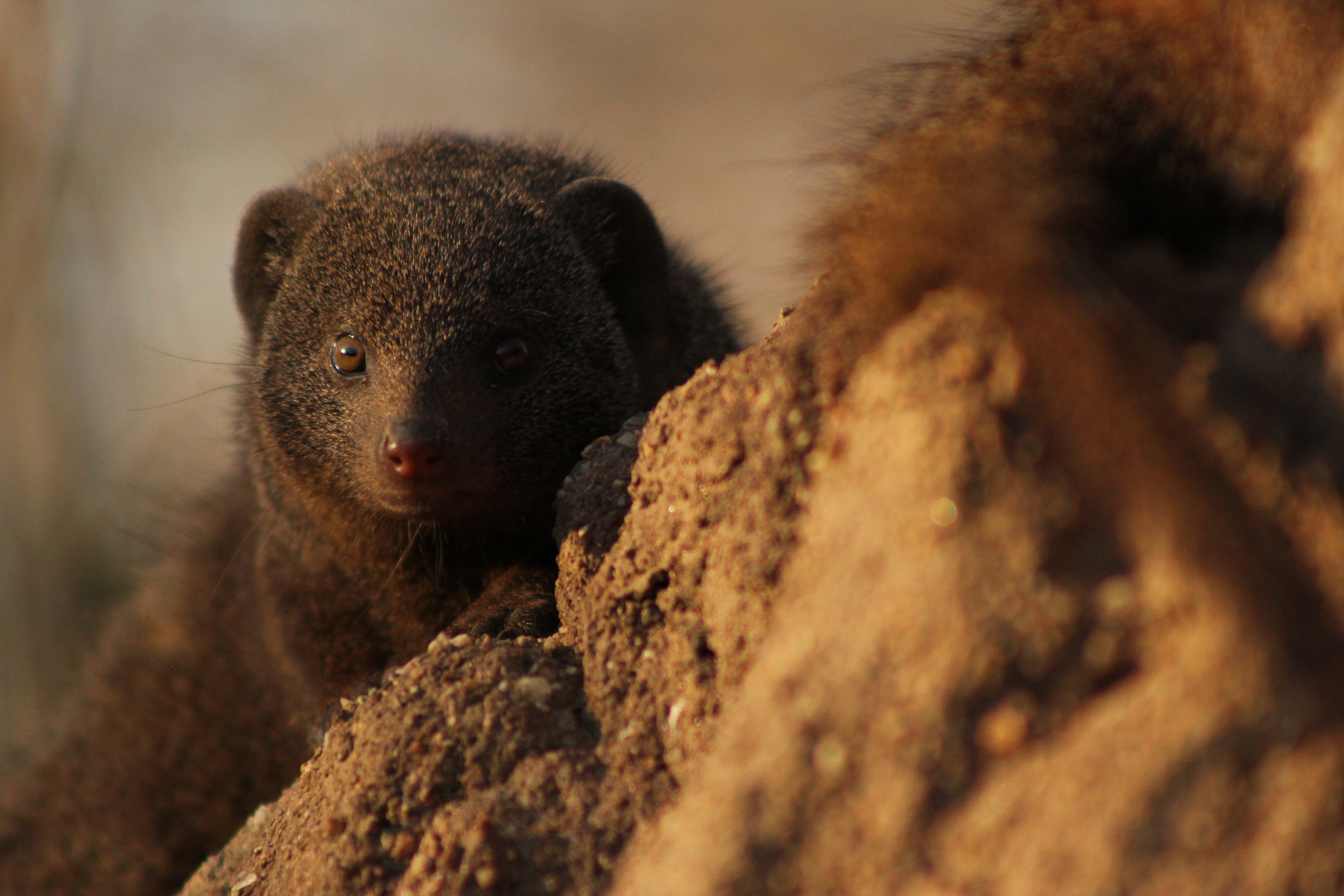
One main theme of our research concerns the behaviour and vocalisations of social animals. We use a combination of detailed observations, sound recordings and analysis, and a variety of experimental manipulations. We work on several different bird, mammal, fish and invertebrate study systems in captivity and around the world (e.g., South Africa, Australia, French Polynesia, Panama, Trinidad), including the Dwarf Mongoose Research Project which we established in 2011.
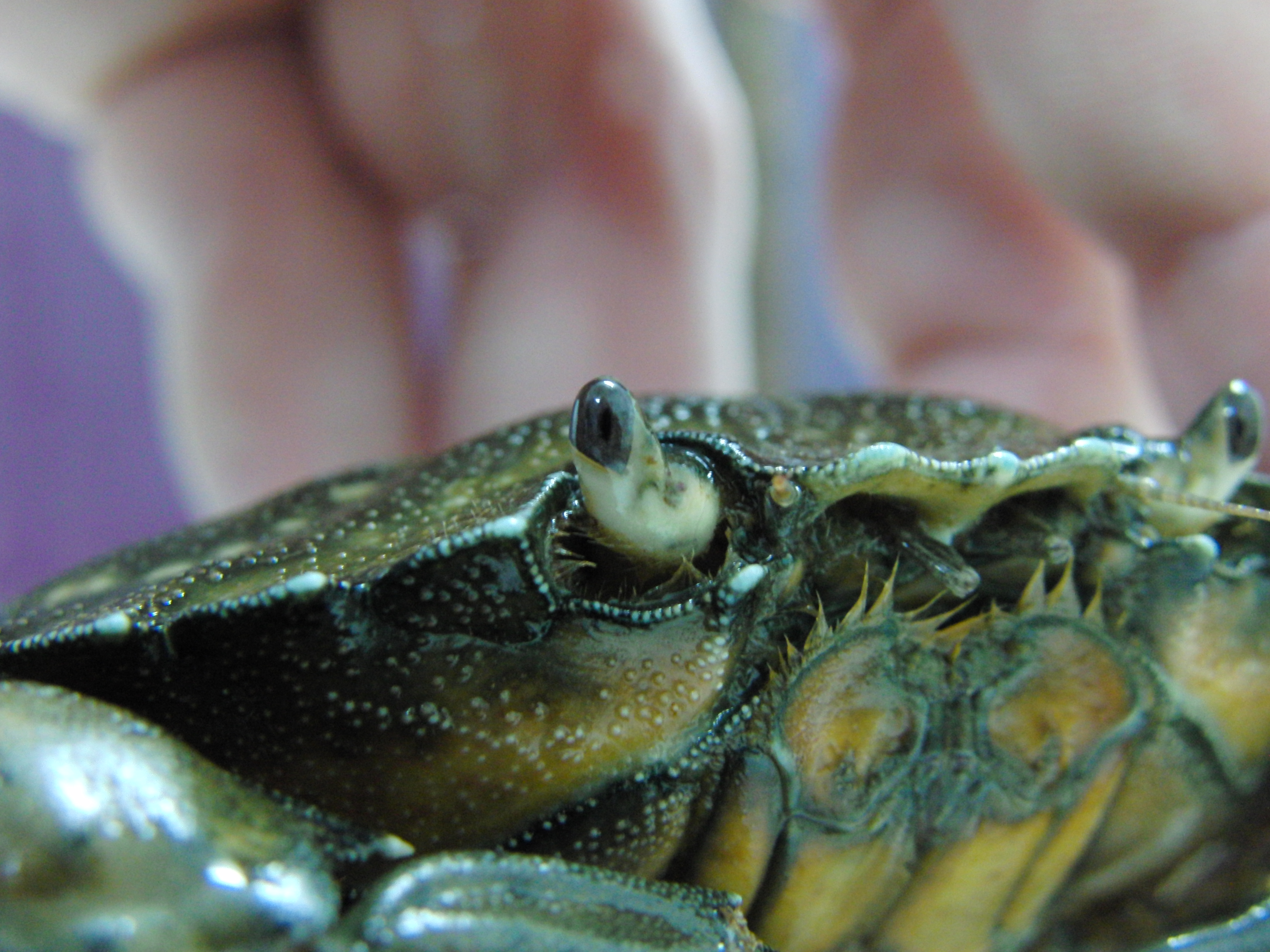
The second major theme of our research concerns the impact and mitigation of human activities on wildlife. Using a combination of laboratory and field experiments (in, for example, Scotland, France, French Polynesia, Curacao and Australia), we are investigating how anthropogenic noise affects the behaviour, physiology, development and fitness of a variety of fish and invertebrate species, as well as interspecific interactions and community structure. We are also exploring how human disturbances, including coral bleaching, can change natural soundscapes and the resulting consequences. Increasingly, we are working with conservation organisations, governments and local communities to test mitigation strategies and minimse the impact of human activities.
FUNDING SOURCES
We are extremely grateful to the following for funding:
RECENT NEWS
OPPORTUNITIES
If you are interested in potential PhD, Masters or intern opportunities, then please feel free to email through a cover letter and cv. Specific projects will be advertised here when available; self-funded applicants welcome to apply any time.
We are always keen to host fellows (those funded by Marie Curie, NERC and the Swiss National Science Foundation have recently finished their fellowships with us) or to discuss new collaborative ideas, so don’t hesitate to get in touch.
We often take on research assistants to help with our work, including at various fieldsites and in the Bristol-based aquarium facility; specific positions will be advertised here.
SELECTED RECENT PUBLICATIONS
- Arbon, J.J., Morris-Drake, A., Kern, J.M. & Radford, A.N. Dwarf mongooses pre-emptively alter their behaviour relative to the threat posed by different rival groups. Nature Ecology & Evolution
- Radford, A.N., Morris-Drake, A. & Arbon, J.J. (2025) After the fight: post-contest acoustic signalling. Proceedings of the Royal Society, Series B 292: 20250761.
- Matchette, S.R., Hamilton, N.M., Schneider, J., Drerup, C., Winters, S., Radford, A.N. & Herbert-Read, J.E. (2025) Predators hide against colour-matched species to camouflage on the move. Proceedings of the Royal Society, Series B 292: 20252215.
- Weschke, E., Schligler, J., Hely, I., Roost, R., Schies, J-A., Williams, B., Dworzanski, B., Mills, S.C., Beldade, R., Simpson, S.D. & Radford, A.N. (2024) Artificial light increases nighttime prevalence of predatory fishes, altering community composition on coral reefs. Global Change Biology 30: e70002.
- Matchette, S.R., Drerup, C., Davison, I.K., Simpson, S.D., Radford, A.N. & Herbert-Read, J.E. (2023) Predatory trumpetfish conceal themselves from their prey by swimming alongside other fish. Current Biology 33: R801-R802.
- Kings, M., Arbon, J.J., McIvor, G.E., Whitaker, M., Radford, A.N., Lerner, J. & Thornton, A. (2023) Wild jackdaws can selectively adjust their social associations while preserving valuable long-term relationships. Nature Communications 14: 5103.
- Morris-Drake, A., Cobb, B., Kern, J.M. & Radford, A.N. (2023) A positive effect of cumulative intergroup threat on reproductive success. Proceedings of the Royal Society, Series B. 290: 20231853.
- Kern, J.M., Morris-Drake, A. & Radford, A.N. (2023) Behavioural, demographic and fitness consequences of social instability in cooperatively breeding dwarf mongoose groups. Proceedings of the Royal Society, Series B 290: 20230901.
- Nedelec, S.L., Radford, A.N., Gatenby, P., Davidson, I.K., Jimenez, L.V., Travis, M., Chapman, K.E., McCloskey, K.P., Lamont, T.A.C., Illing, B., McCormick, M.I. & Simpson, S.D. (2002) Limiting motorboat noise on coral reefs boosts fish reproductive success. Nature Communications 13: 2822.
- Duarte, C.M., Chapuis, L., Collin, S.P., Costa, D.P., Devassy, R.P., Eguiluz, V.M., Erbe, C., Halpern, B.S., Harding, H.R., Havlik, M.N., Gordon, T.A.C., Merchant, N.D., Meekan, M., Miksis-Olds, J.L., Parsons, M., Predragovic, M., Radford, A.N., Radford, C.A., Simpson, S.D., Slabbekoorn, H., Staaterman, E., Van Opzeeland, I.C., Winderen, J., Zhang, X. & Juanes, F. (2021) The soundscape of the Anthropocene ocean. Science 371: eaba4658.
- Kennedy, P., Sumner, S., Botha, P., Welton, N.J., Higginson, A.D. & Radford, A.N. (2021) Diminishing returns drive altruists to help extended family. Nature Ecology and Evolution 5: 468–479.
- Kennedy, P., Higginson, A.D., Radford, A.N. & Sumner, S. (2018) Altruism in a volatile world. Nature 555: 359–362.